How to Choose the Right Fetal Monitor
Fetal monitors are vital tools in modern obstetric care, enabling clinicians to assess fetal well-being during the third trimester and throughout labor. For procurement managers, OB/GYN departments, and maternal health providers, selecting the right fetal monitor means balancing technical precision, patient workflow, and IT integration.
This guide provides a comprehensive comparison of fetal monitoring systems, key decision criteria, and supplier selection best practices.
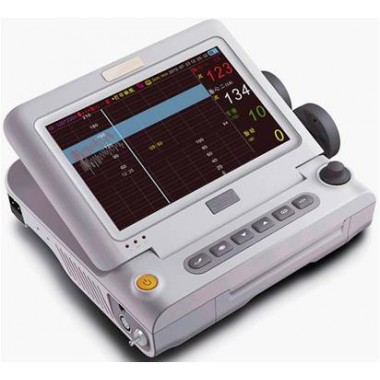
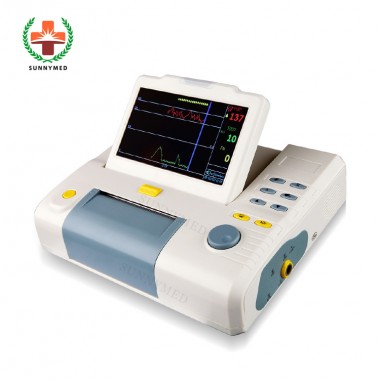
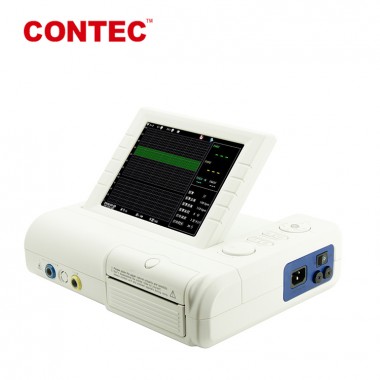
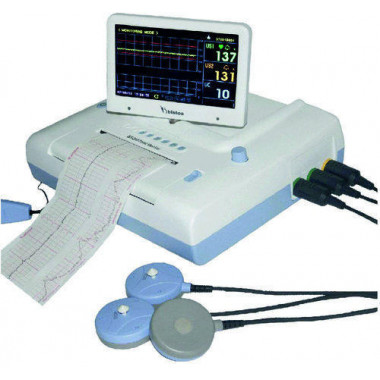
Browse Fetal Monitor ListingsA professional fetal monitoring system includes:
- Doppler ultrasound transducer for accurate fetal heart rate (FHR) detection
- TOCO transducer for uterine contraction monitoring via external pressure
- Dual-channel FHR support for twin pregnancies
- Optional maternal modules for NIBP, SpO₂, ECG, and temperature monitoring
- Auto-analysis software for baseline detection, deceleration alerts, and trend reports
- Trace recording and printing for medical documentation and compliance
- Connectivity features such as USB, LAN, or wireless for data export and HIS/EMR integration
High-end models offer enhanced signal filtering, high-resolution displays, and event annotation to streamline clinical decisions during labor.
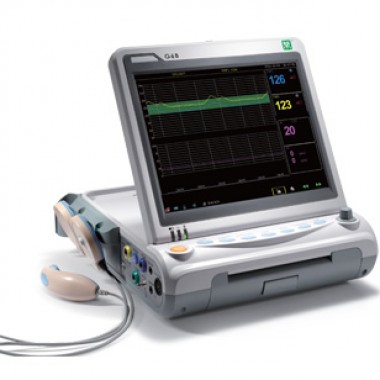
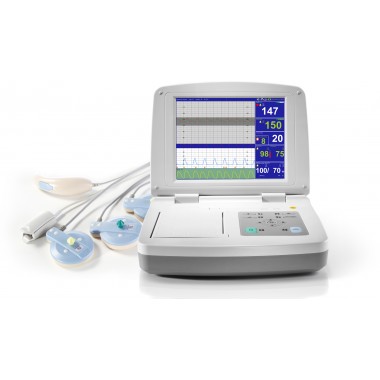
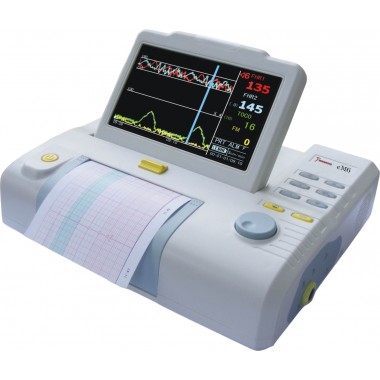
Fetal monitors must adapt to a variety of care environments and integrate into daily workflows:
- Often networked to central monitoring systems for real-time multi-bed trace viewing.
- Used alongside maternal monitors for close surveillance of preeclampsia or gestational diabetes cases.
- Require compact devices with simplified user interfaces and print/export functions.
- Benefit from lightweight, battery-operated monitors suitable for rural outreach programs.
- Applied in the preoperative and intraoperative stages to ensure fetal well-being.
Workflow success depends on user interface simplicity, alarm precision, data continuity, and cross-departmental system compatibility.
1. Are you monitoring single or twin pregnancies?
Choose models with dual FHR channels if twin gestations are common.
2. Do you need integrated maternal monitoring?
Consider devices that also track NIBP, SpO₂, and ECG for high-risk pregnancies.
3. Is the device intended for stationary or mobile use?
Portable models with battery backup are best for rural or home care settings.
4. Will data be stored or transmitted?
Ensure compatibility with EMR systems or external storage options (USB, LAN, Wi-Fi).
| Feature | Why It Matters |
|---|---|
| FHR Monitoring Accuracy | For detecting abnormal variability or late decelerations. |
| Twin Monitoring Capability | Required in fertility clinics or high-multiple gestation facilities. |
| TOCO Sensitivity | Influences assessment of labor stage and contraction strength. |
| Auto Analysis & Alerts | Helps clinicians interpret CTG readings efficiently. |
| Trace Display & Printing | Ensures real-time and retrospective waveform clarity. |
| Data Export & Integration | Supports record-keeping, audits, and EMR connectivity. |
| Probe Ergonomics & Reliability | Affects patient comfort and signal stability during long monitoring. |
| Type | Best Suited For |
|---|---|
| Standard FHR + TOCO Monitors | General obstetrics and labor monitoring. |
| Maternal-Fetal Monitors | High-risk OB care requiring integrated maternal vitals. |
| Twin Fetal Monitors | Facilities dealing with twin or multiple pregnancies. |
| Portable / Wireless Units | Community clinics, mobile programs, and decentralized maternity care. |
- Using single-probe models in multi-gestation pregnancies.
- Neglecting signal stability for obese or highly active patients.
- Relying on monitors without data backup or trace storage.
- Choosing units without printer output in documentation-reliant workflows.
- Overlooking EMR compatibility and staff training requirements.
Fetal monitoring systems are evolving toward:
- AI-assisted CTG interpretation to reduce false positives and improve early warnings.
- Wireless telemetry systems that increase maternal mobility and comfort during labor.
- Remote monitoring support for community healthcare and decentralized hospitals.
- Compact, cost-efficient models tailored for emerging markets and mobile outreach.
- EMR/cloud integration to enable regional trace archives and telehealth collaboration.
When sourcing fetal monitors, ask suppliers:
- Is the product CE/FDA/ISO13485 certified?
- Are twin monitoring probes and maternal modules included or optional?
- What is the signal stability in high-BMI or low-movement scenarios?
- Can the unit be integrated with existing EMR or hospital data systems?
- Are training, maintenance, and software upgrades included in after-sale support?
Visit Drugdu.com to explore recommended fetal monitor manufacturers tailored to your clinical requirements.
For OB/GYN departments and perinatal centers, fetal monitors are critical for real-time decision-making and long-term outcome assurance. Focus on monitoring precision, dual-FHR readiness, alarm accuracy, and HIS compatibility. In outreach or mobile care contexts, prioritize portability and trace export options.